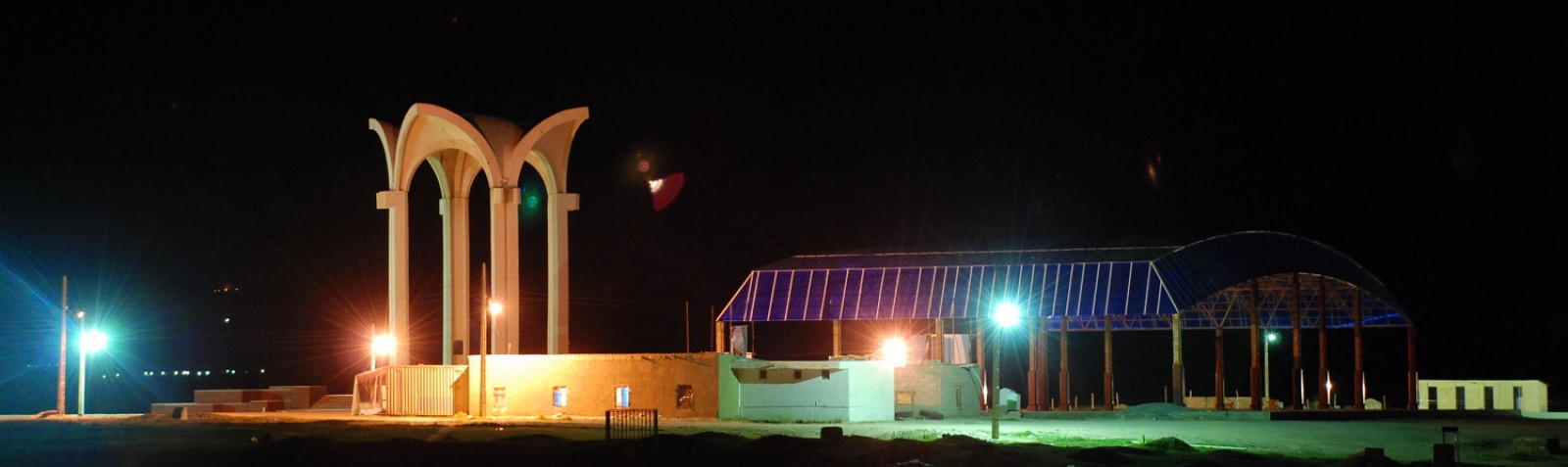
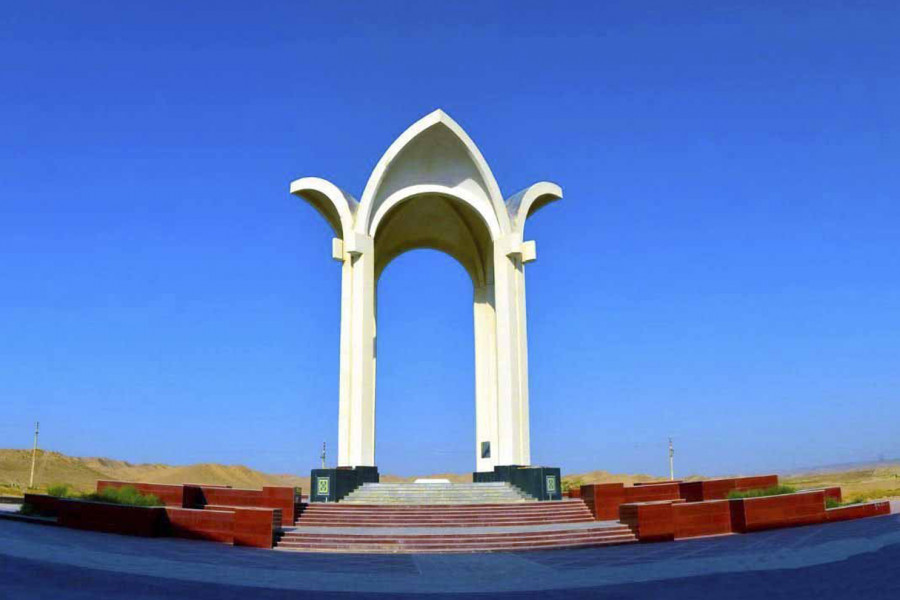
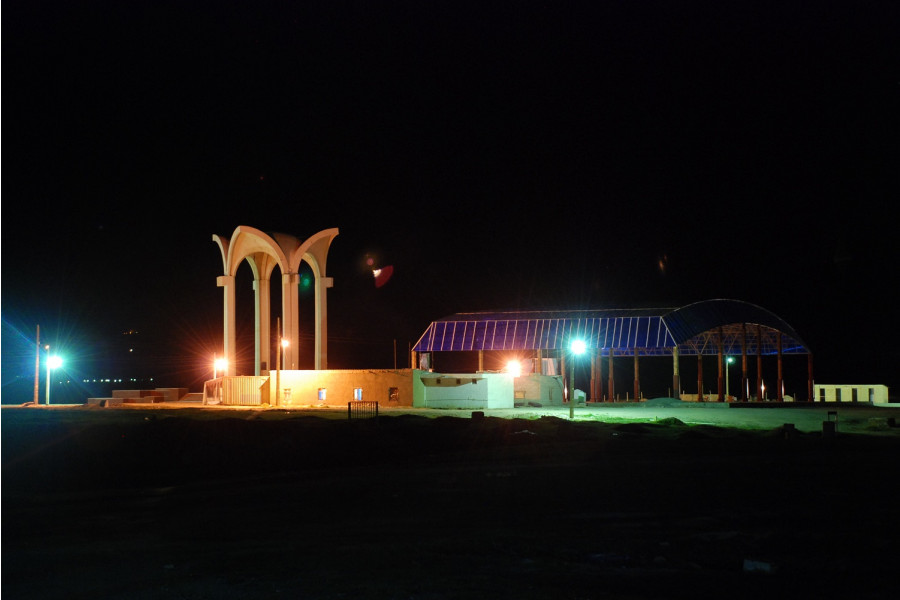
Makhdoom Qoli Faraghi Mausoleum or Makhdoom Qoli Golestan Mausoleum is placed in Maraveh Tappeh city, in the village of old Aq Taqe, Golestan province. The building was erected in the late Qajar and early Pahlavi I period. Makhdoom Qoli is the poet of Turkmen who passed away in 1756 or 1763. The mausoleum building which was erected over the grave of this poet is related to 1990s. the building was officially opened on May 10, 1999, with the presence of Saparmurat Niyazov, the then Turkmenistan president, Ata-Allah Mohajerani, the then minister of Culture and Islamic Guidance of Iran. A magnificent ceremony is held Every year in the mausoleum on the birthday of this distinguished poet, with the present of the authorities of two countries.
Born in 1690, Makhdoom Qoli Faraghi was a Turkmen poet and one of the most significant poets of Turkmen language. He was highly popular among people of Turkmen who is considered to be a historic character for them. His poetries are mostly around the political and social issues and then, he is known as an intellectual among Turkmen people. He deals with issues in his poetries which were quite new and leading compared with his own time. Matters which have not still recognized even until very recently. The criticism of polygamy, encouraging education, the important role played by women in the society, condemnation of poverty and class differences and the drug damages are among the issues popular in Makhdoom Qoli’s poetries.
He has the same place for Turkmen people as Hafiz has for Persian speakers and his Divan is the same as Hafiz Divan for Turkmen people. He has an unprecedented reputation and popularity in Turkmen society. He is considered to be the founder of the new Turkmen literature. You can find Makhdoom Qoli’s Divan in every Turkmen home. Makhdoom Qoli has been titled as Turkmen’s Ferdowsi, by Mohammad Ali Jamalzadeh, the great master of Persian language and literature, because he has revived the Turkmen literature and culture in his poetries.
The mausoleum of this late poet is now shining on a hill, placed around the border of Iran and Turkmenistan, in the west of Maraveh Tappe. A person named Haji Morad Dordi was the first one who took some measures in order to reconstruct the mausoleum. The first new edition of his Divan was also the result of Dordi’s endeavors. There are two graves in this building, one belonged to him and the other to his father, Dolat Mohammad Azadi. The construction was totally simple before the Islamic revolution limited to just two cement graves. However, it was later developed as the result of the interactions between two countries.
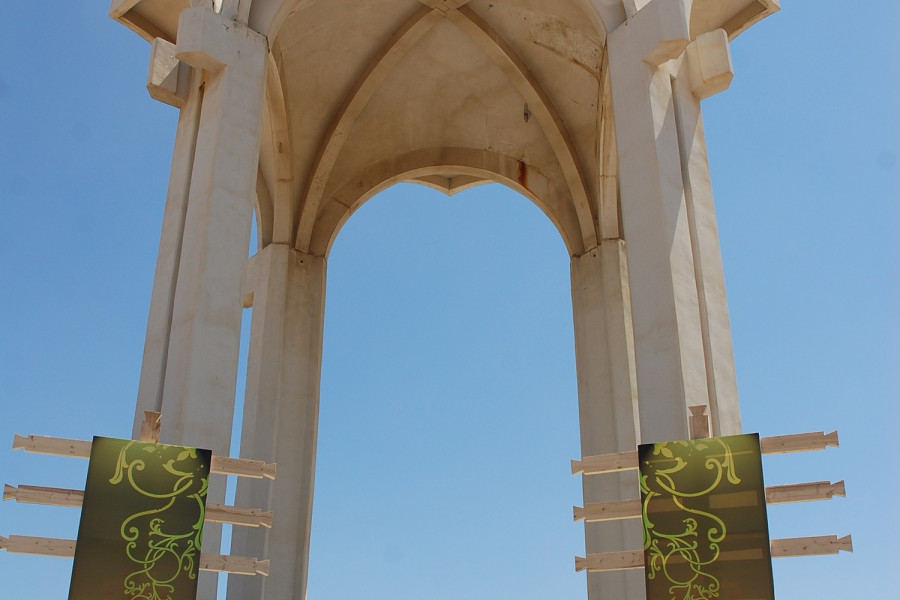
The first gathering around this building was held in the spring of 2006. The building has been erected in an open air thrown-like area of 24 square meters and 10 meters height from the ground level. The grave of the poet and his father are both cradle-shaped. There are small gardens on four sides of the graves giving a more poetic atmosphere to the place with beautiful geranium flowers. The main plan of the building has been inspired by the Turkmen wild flower combined with the Turkmen gazebo. The central roof is dome-like and its shelter is driven from the structure of Turkmen gazebo and Islamic architecture. Two graves are visible below the structure on a bed of a meter height above the ground level. There is also a stone bench provided for the visitors on the southwestern side.
The area was introduced as a top tourism region with the approval of the government board in 2007. Then, it was planned to develop the landscaping and constructing dome over the mausoleum in an area of ten hectares using a plan and pattern inspired by the traditional feelings and culture of Turkmen people. Finally, the plan was implemented in an area of seven hectares in which the prayer hall and its side space encompass 300 meters. There are twenty pooled springs in two areas, forty gazebos, a 350-meter restaurant in the open air, a 2500-square meter open amphitheater, exhibition and handicrafts bazar with ten chambers in an area of 350 meters.
Makhdoom Qoli Faraghi Mausoleum was registered in the list of Iran National Heritages on March 16, 2008. (No. 22251) The complex is now placed on the northeastern side of Golestan province, in the north of Atrak river and west of Maraveh Tappeh, in a region named Aq Taqe or Aq Tqay which means white plain, located between Maraveh Tappeh and Karand villages. If you are going to travel to this place from Gonbad-e Kavous city, you can take the Incheh Borun Road. It is a 155-kilometer path. In addition, you can start your trip from Kalaleh by passing through Maraveh Tappeh. The best time for this trip is the early autumn.