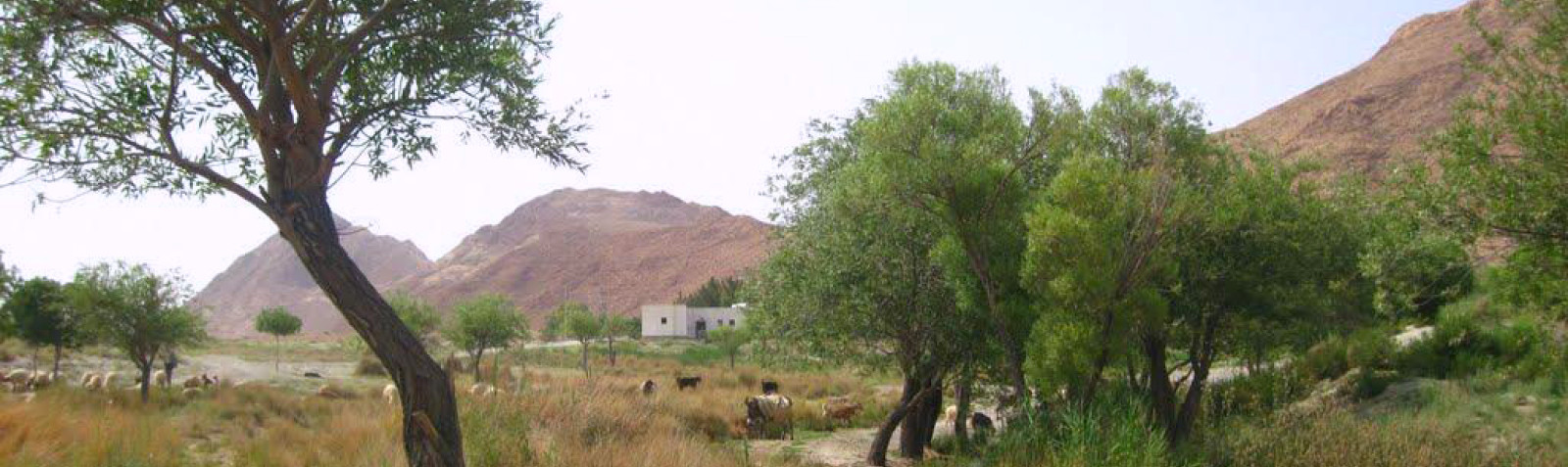
Harat Headwaters Area
It is placed in the southern part of Yazd, that reaches to Shiraz from one side and to Kerman from the other. It is the second city of pistachio in Iran, after Rafsanjan. we are talking about Khatam city. Due to the abundant castles- such as Maleki, Mohammad Karim Khan, Mohammad Baqeri, etc.- Khatam is called the city of castles or Dar al-Kalat. Harat is the center of Khatam city that has a desert weather. It embraces many historical and natural attractions like Mohammad Baqeri castle, Dr. Salehi house, Bagh-e Shadi and Bagh-e Ma’dan jungles, headwaters area, No-hunting area of Qara Tappeh, Borouyie wildlife shelter and a river that is the only permanent river in the province. but one of these natural attractions in Harat, that is the Headwaters Area is one of the top five tourism regions of Iran and the seventh invaluable natural heritage registered in the list of Iran national-natural heritages.
The Headwaters Area is placed five kilometers southeast of the city of Harat. Nehr-e (stream) Masih that is the only permanent river of the province and is full of water, dating back to 10000 years ago (the first geology course- quartz) is placed in Harat. It passes through the center of the city.
The river has had 400 liters/s of water during the wet years. But in recent years this figure decreased to 180 liters/s due to the drought and the lack of rainfall. However, the rainfall of this year has slightly compensated for this shortage. There is a Qanat close to this old stream with three kilometers of long, namely Taaj Abad, that is one of the busiest Qanats in Yazd. The existence of this Qanat along Masih stream makes it more attractive. There is a jungle park near these two natural attractions in this region. It has become a public promenade including the welfare facilities for tourists like prayer room, restaurant, shops and residential houses. These recreational facilities have been arranged in 1387 SH by the Cultural Heritage, Handicrafts and Tourism Organizations of Khatam city. This natural attraction was inscribed on the index of Iran National-Natural Heritages with no. 7.