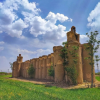
Sextet Pigeon Towers
The masterpiece of Persian architecture in terms of agriculture can be observed in pigeon towers. These cylindric towers were in fact served as the manufacturer of fertilizer in the past. Since the Safavid era, when the most remarkable pigeon houses were built, to the early Pahlavi rule, farmers were used to serving the cumulated refuses in pigeon houses today replaced by the factories of chemical fertilizers.
Isfahan is one of the cities where the most pigeon towers have been constructed; including from the towers of Najaf Abad to Mobarakeh and Ardestan which are still active. Although, there is nothing remained of the old pigeon towers, it is a kind of heritage which should be properly protected.
There is a town named Karkevand, located 56 kilometers away from Isfahan province, in Mobarakeh city. Although the city is not considered a central region, it was a prosperous place not long time ago, in Safavid era. The old bathhouse, the ruler historical house and its pigeon towers are witnesses of the claim.
Karkevand pigeon towers are connected together like six interrelated towers which are called sextet Pigeon Towers. The towers are connected like six semicircular cylinders adorned with crowns which dabbles the beauty of the building. Towers are twelve meters high and the total area of its floor is thirty square meters. The number of pigeons in each tower depends upon the size of the building changing from 12000 to 25000. This one is not that much large housing around 200 to 300 pigeons. Brick and stucco decorations which make an uneven surface prohibit reptiles from injuring the pigeons. Inside the structure is full of holes, from top to bottom, which are served as the birds’ nests and the architectural style has been designed in a way that the safety and security are totally considered in all seasons of a year so that no feral bird is not able to enter the place.
The construction materials of the sextet towers are adobe, clay and brick keeping the temperature of the place moderate in all seasons of a year; that is pigeons experience cold summers and warm winters here.
Not only made the repeated droughts, inattention and off course the establishment of chemical fertilizer factories these towers useless, but they also started to get ruined over time, Until 1384 SH when the precious architecture of sextet pigeon tower was reconstructed by Karkevand municipality’s efforts.