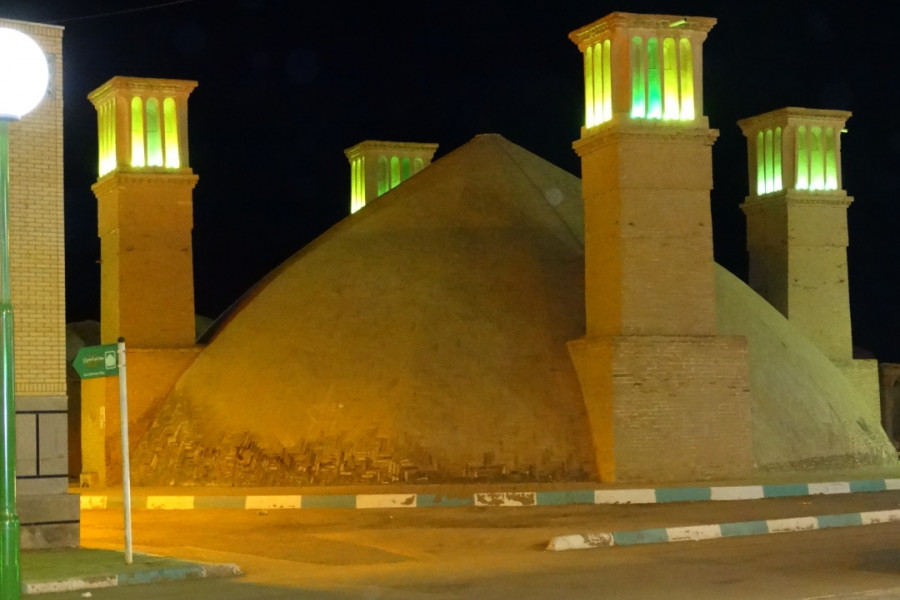
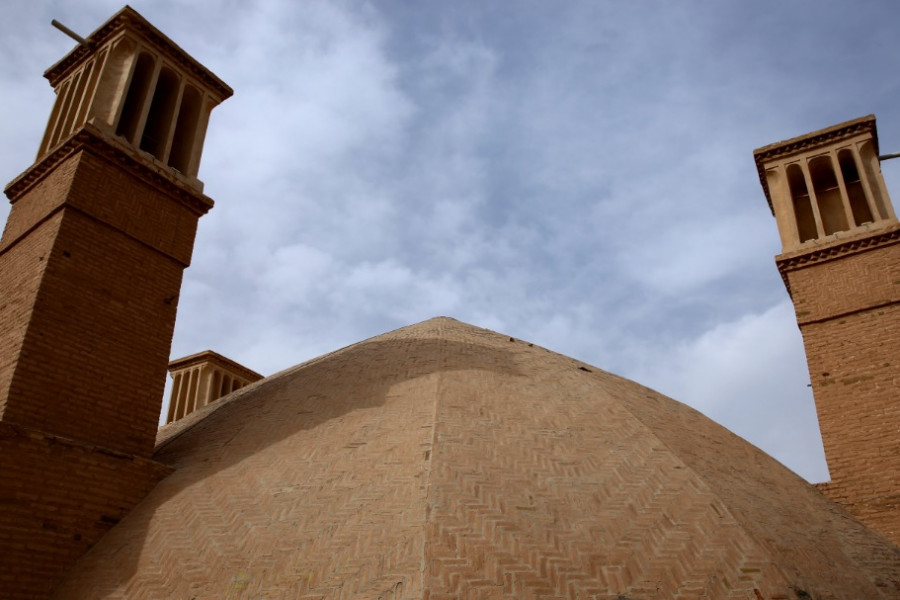
A water reservoir, also known as an underground cistern, is a covered circular structure built to store drinking water deep underground, usually filled from canal water. Water reservoirs are considered unique architectural features of desert and arid regions.
The main components of a water reservoir are as follows:
Water storage chamber: It is a large circular well-like structure, similar to a covered pool, covered with brick walls and polished with plaster. It is located underground.
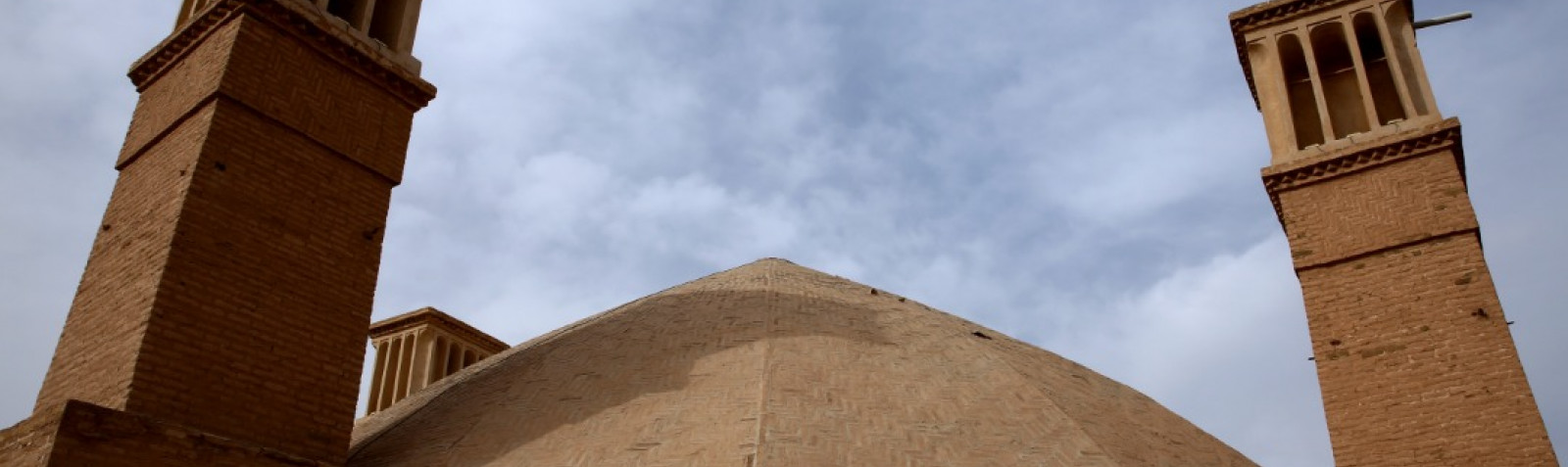
Air duct and windcatcher: Similar to a kiln, the air duct allows the heat inside the water reservoir to escape in four directions and brings in cool air from outside, resulting in the cooling and circulation of water for several months.
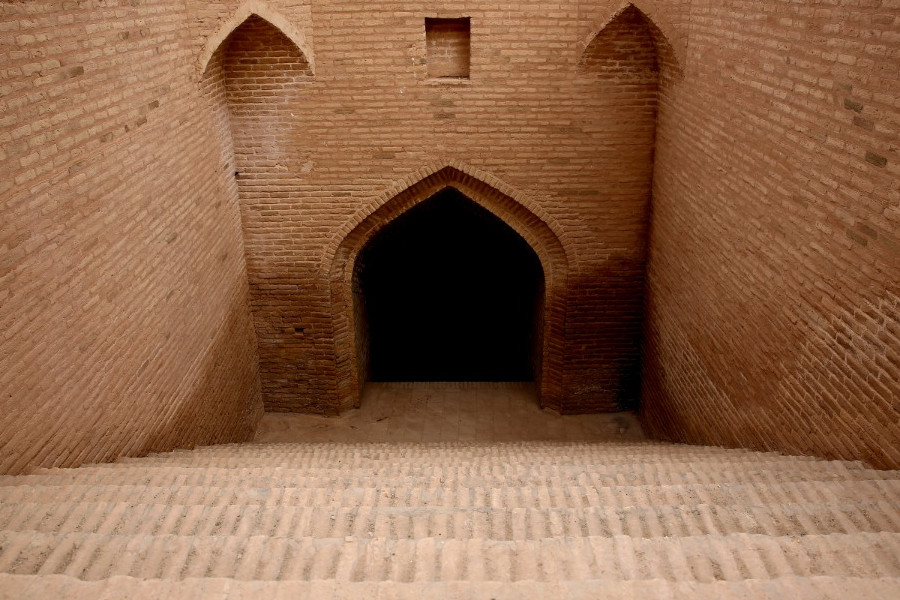
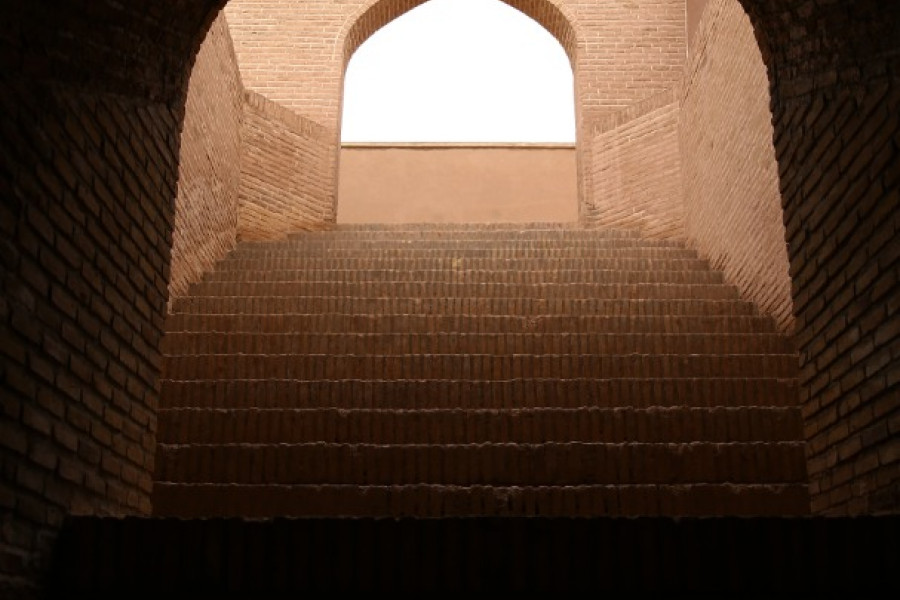
Stairway and spout: The number of steps depends on the depth of the reservoir and its distance below ground level. At the end of the steps, in a semi-circular area (spout), about half a meter above the ground, a water faucet is installed for public use.
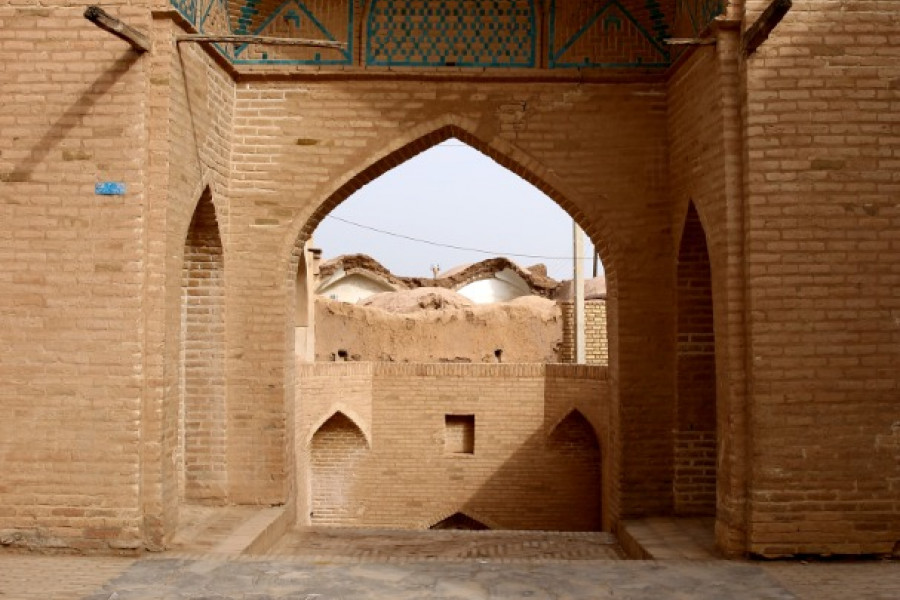
Entrance gate: The entrance to the water reservoirs is through an arched gate, sometimes adorned with tiles, in a brick-paved area for rest and refreshment after climbing the stairs.
Due to its desert climate, four water reservoirs were constructed in the city of Harand, by benevolent individuals and are considered historical and touristic attractions of the city. It is said that all of Harand's water reservoirs are remnants from the Qajar era.
Keshte (Shahidān) Neighborhood Water Reservoir: The first water reservoir built in Harand, with a capacity of 2,268,650 liters, is the second-largest water reservoir in the country and the third-largest in the world. This remarkable and unique architectural structure was constructed in the early Qajar period by a benevolent individual named the late Haj Sheikh Shokrollah Harandi (the late Hassan Diba'I’s ancestor), a wealthy merchant of the region. It is located near the historical house of Sabaghiha. The complex was completed with a mosque, a public bathhouse, and residential buildings around it.
This water reservoir features a beautiful entrance gate with 40 steps and remains well-preserved in the old part of the city. It has four windcatchers, with a height of 9.40 meters. In the center of the reservoir, there is a dome with a diameter of 14 meters and a height of 7.80 meters. Currently, three of the windcatchers' openings are blocked, and the surrounding structures of the reservoir dome have been partially destroyed. The Keshte (Shahidān) Neighborhood Water Reservoir was registered as a national heritage site on May 22, 2005, with the registration number 12993.
According to an existing inscription, the second water reservoir in Harand was built in the early Qajar period by a benevolent individual named Haj Abdul Karim Harandi near Imamzadeh Is'haq, close to the northeast tower and gate of Harand, and the beginning of the eastern to western market. This water reservoir was registered as a national heritage site on May 22, 2005, with the registration number 12999.
Darbeh Neighborhood Water Reservoir is the third water reservoir in Harand, built during the Qajar period in the western part of Harand. It was registered as a national heritage site on May 22, 2005, with the registration number 13384.
The fourth and last water reservoir constructed in Harand is the Bazaar Water Reservoir, located at the end of the new bazaar, near Imam Khomeini Mosque. This water reservoir was registered as a national heritage site on May 22, 2005, with the registration number 12996. It is said that a benevolent individual named the late Haj Mohammad Sadegh Harandi was the builder of the Bazaar Water Reservoir. Recently, this water reservoir has been restored by the Harand Municipality. All of Harand's water reservoirs are supplied with water from the qanats and were designed and built by Yazd skillful craftsmen. They were endowed by their founders for public use.