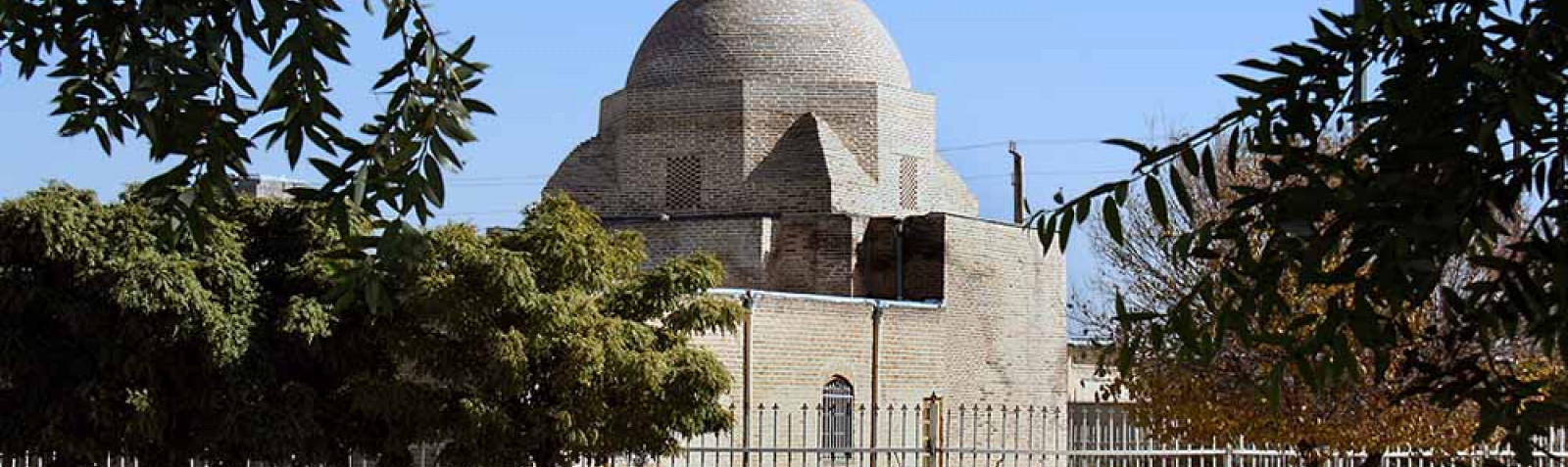
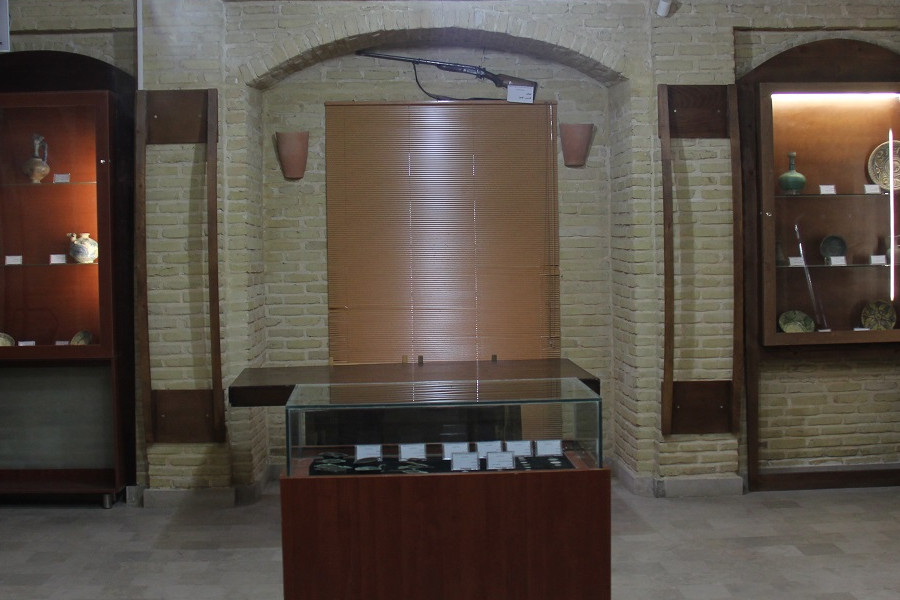
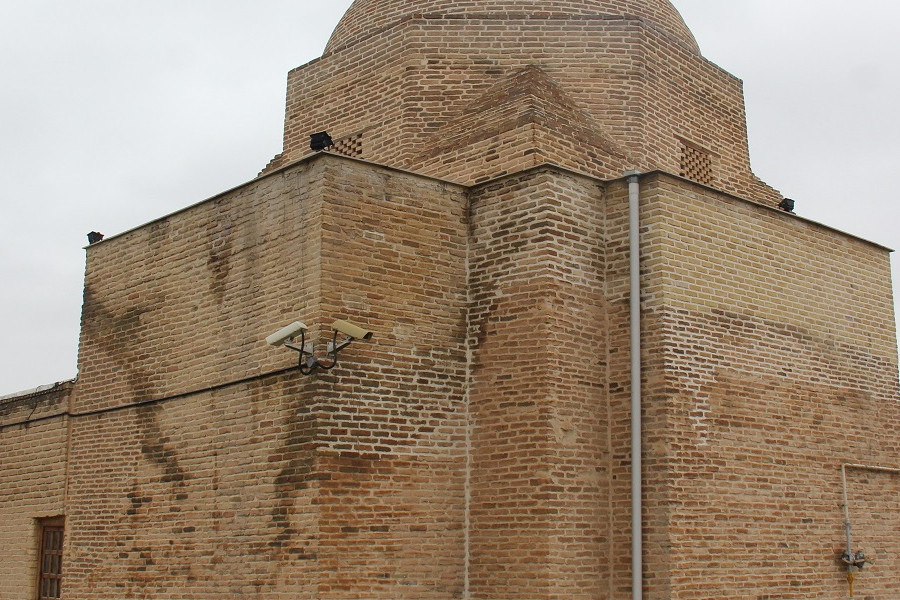
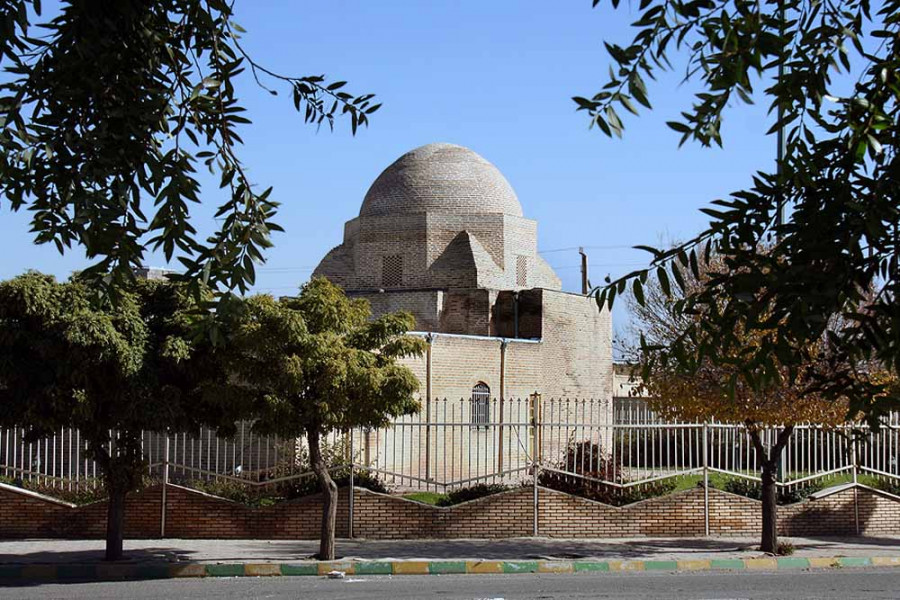
The building known as Pir Ahmad Zahr Noush is currently located at the southernmost end of Abhar city, in the middle of Pir Square. About a decade ago, when the city had not expanded much, the end of 17 Shahrivar Street was an open area where the Pir Ahmad shrine was located. After the city's expansion and the construction of new streets and avenues, the historical building was placed in the middle of a small square. Following the construction of the square, the historical Pir building was situated in the middle of a green space enclosed by iron railings. This building is actually the remains of a complex consisting of two main interconnected sections. The first section is a high domed chamber, which, due to the presence of a crypt, served as the burial place for one or more important figures. The second section, according to some researchers, includes the western and northwestern spaces of the domed chamber, which were used as a monastery and place of worship. Since 2011, the archaeological museum has been established in this place.
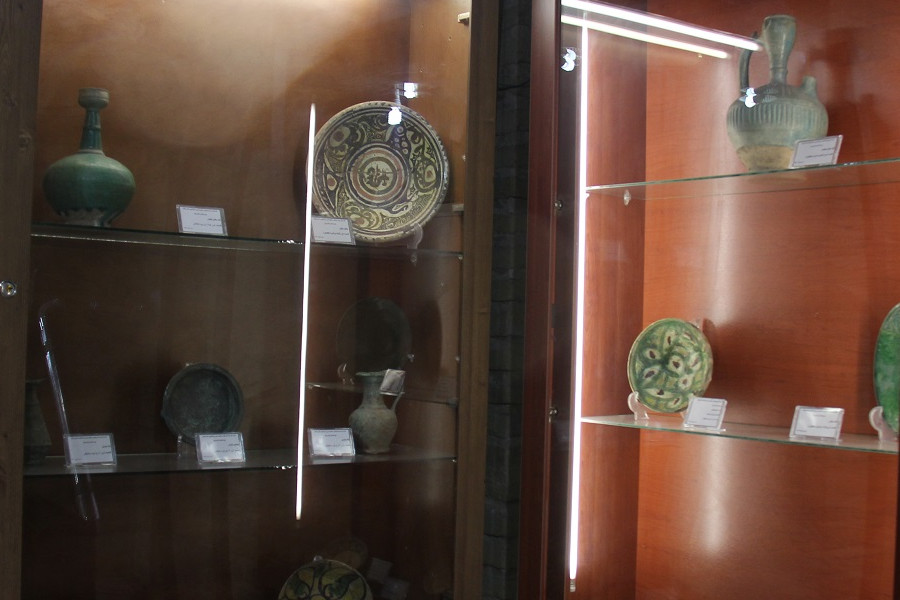
The objects in the Abhar Archaeological Museum are displayed in three sections: historical, Islamic, and inscriptions.
Historical Section:
In this section, objects discovered from Abhar, including simple pottery vessels, a pottery spout, a pottery jug, and a bronze dagger from the Iron Age and the first millennium BC, are displayed. Additionally, various bronze armbands, bronze rings, and Parthian pottery vessels can be seen in the showcases.
Islamic Section:
This section features various pottery vessels from the 4th century AH to the Qajar period. Additionally, objects discovered from Soltaniyeh, including simple oil lamps, plates, and glazed vessels, are also present in the museum. This section also displays various manuscripts from the Timurid to the Qajar period on religious and astronomical subjects, various Qajar period guns, coins from the Seljuk, Ilkhanid, Safavid, and Qajar periods, and more. Furthermore, several engraved copper vessels from the Qajar period made in Zanjan are exhibited in the Islamic section showcases.
Inscriptions Section:
This section displays several tombstones discovered from the village of Darreh Sejin Abhar and the village of Falaj Khorramdarreh, dating back to the Qajar period, as well as a Timurid period tombstone discovered from Sain Qaleh Abhar. Additionally, objects donated by the people of Abhar are also displayed in this section.
Museum Visiting Hours:
The museum is open daily from 9 AM to 7 PM in the first six months of the year and from 8 AM to 5 PM in the second six months of the year. The museum is closed on June 4th, the 21st of Ramadan, the 25th of Shawwal, the 9th and 10th of Muharram, and the 28th of Safar.