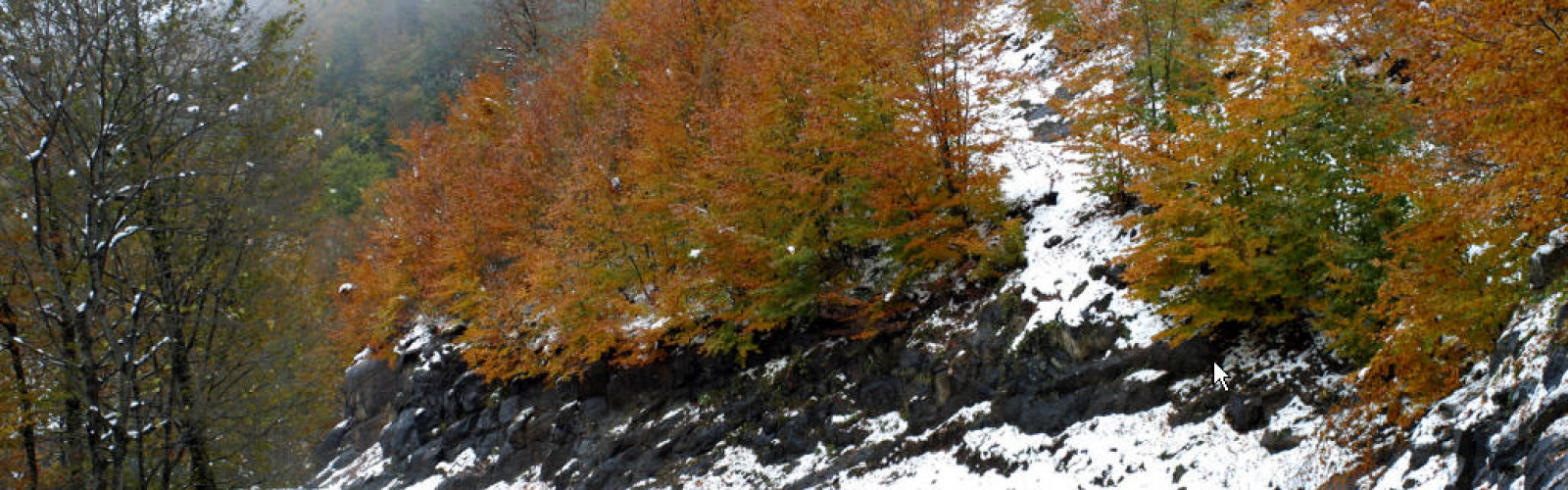
From the forests of Arsbaran to the heart of Hyrcanian paradise
Tabriz - Bostan Abad - Sarab - Sarein - Ardabil – Heyran Neck - Astara - Talesh - Bandar Anzali – Rasht
Tabriz
Tabriz is one of the oldest and biggest cities of Iran on the hillside of the Sahand Mountain...
Ardabil
Ardabil is located in southwestern of Caspian Sea among a great plain on the hillside of Sabalan Mountain...
Bandar Anzali
Anzali is one of the most important ports of Iran alongside the Caspian Sea and one of the...
Rasht
Rasht is located at center of Gilan plain, in the widest delta part of Sefidrood River with the...Day 1
We leave Tabriz early in the morning and after about one hour we reach Bostan Abad, which is actually the ancient city of Ojan; Ojan was the summer capital of the Mongol Sultans during the Ilkhanate period, and at that time it was a completely royal and aristocratic city.
In Bostan Abad, we can see the ruins of Nayeb al-Saltaneh mansion along the road of Kheyrabad and Chaman Ojan. We can also visit Qezel Kushk which was the house and royal palace of the Mogol kings. Tahuneh Hill (Dirman Tepe Si) is also an ancient hill with many and mysterious artifacts, located between the Sabrlu River and Haj Agha.
Diznab is also placed here; it is a cemetery related to the 7th and 8th centuries AH, where we can see graves with Arabic script and language. Among the other wonders of the region, we can mention the stone rams which were probably a symbol of power and invincibility in some governments, which were placed on the tombstones of warriors. We can also visit Shah Abbasi caravanserai named al-Khalej in Jangour hill of Bostan Abad.
We start again to reach the mirage. We can have lunch in the first day in Sarab and start visiting Sarab from its mosques, the Grand Mosque of Sarab and the Stone Mosque of Arzanaq, both of which have been left from the reign of Ilkhanate, as well as the brick mosque of Asfestan, where there is a tomb of one of the Mongols.
There are also two important stone inscriptions in the area of Sarab: Razliq and Nashtban inscriptions with cuneiform belonging to the Urartu period. In Sarab, we can also visit the Jalali public bathhouse, which is currently the ethnography museum.
At the end of the day, we will move from Sarab to Sarein and Ardabil and have dinner in Sarein or Ardabil and stay the night here. Day 1
We leave Tabriz early in the morning and after about one hour we reach Bostan Abad, which is actually the ancient city of Ojan; Ojan was the summer capital of the Mongol Sultans during the Ilkhanate period, and at that time it was a completely royal and aristocratic city.
In Bostan Abad, we can see the ruins of Nayeb al-Saltaneh mansion along the road of Kheyrabad and Chaman Ojan. We can also visit Qezel Kushk which was the house and royal palace of the Mogol kings. Tahuneh Hill (Dirman Tepe Si) is also an ancient hill with many and mysterious artifacts, located between the Sabrlu River and Haj Agha.
Diznab is also placed here; it is a cemetery related to the 7th and 8th centuries AH, where we can see graves with Arabic script and language. Among the other wonders of the region, we can mention the stone rams which were probably a symbol of power and invincibility in some governments, which were placed on the tombstones of warriors. We can also visit Shah Abbasi caravanserai named al-Khalej in Jangour hill of Bostan Abad.
We start again to reach the mirage. We can have lunch in the first day in Sarab and start visiting Sarab from its mosques, the Grand Mosque of Sarab and the Stone Mosque of Arzanaq, both of which have been left from the reign of Ilkhanate, as well as the brick mosque of Asfestan, where there is a tomb of one of the Mongols.
There are also two important stone inscriptions in the area of Sarab: Razliq and Nashtban inscriptions with cuneiform belonging to the Urartu period. In Sarab, we can also visit the Jalali public bathhouse, which is currently the ethnography museum.
At the end of the day, we will move from Sarab to Sarein and Ardabil and have dinner in Sarein or Ardabil and stay the night here.
Day 2
After having an attractive and fresh local breakfast of Ardabil, we can start our day by visiting the Sheikh Safi al-din Khānegāh and Shrine Ensemble in Ardabil, and after being delighted with the architecture and art of the tomb, before leaving Ardabil, we can touch the water of Shurabil lake.
Let's say goodbye to Ardabil and continue our journey. We are supposed to be on our way to Astara for an hour and a half and we will be surprised (Heyran). Because we are going across one of the most beautiful forest roads in Iran. It is supposed to take us from Zagros to Alborz, the cool Heyran Neck is placed at the very beginning of the route. And everything changes from this point; the Zagros hills of Ardabil turn into mountains and we can see the green valleys of Alborz, as if the season had changed. The perpetual fog of the valleys of the Neck gives us the impression of being on top of a very high altitude, but in fact, we are only 1500 meters above the sea, even at the highest point.
Now we are indeed crossing a path along the Aras River, on the closest road from Iran to Azerbaijan. It is interesting to know that Heyran, the Arabic word from a Talshi word, means the place of clouds and fog. It refers to three villages of Lower Heyran, Central Heyran and Upper Heyran. We should not forget to eat Ash-e Dough and tea.
We will reach Astara. Now that we are going to have lunch in Astara, it is better to choose from among the local dishes of Astara. The most famous among them are Mosamma, Duck Bastrima, Loongi, Chighirtma, Jazoz or Qorma.
In Astara, we can visit the border market of Astara, which is known as Basat Bazaar, or go to the nature, places like Sahel Haviq Forest Park, Lavandevil Waterfall, or Laton Waterfall. After Astara, we reach Talesh, where we can visit Sobatan Villa and Gisum Forest Park.
When we reach the beautiful port of Anzali, it is better to first step on the Ghazian Bridge, which was the first movable bridge in Iran and used to be used by ships and boats from neighboring countries. Other attractions of Anzali include Mian Poshteh Palace, which is now in the possession of the Navy.
The most important attractions of Anzali are Minaret, which was used as a lighthouse to guide sailors and Shams al-Emareh, which is a five-story royal palace, built by the order of Naser al-Din Shah. In this magnificent palace the more we go to the higher floors, the more beautiful it becomes. Motamedieh and the Sadri mansion, the residence of the ruler of Anzali during the Qajar era, are places you must visit in Anzali, as well. The artillery and two Bastian buildings, the Great Mosque and the Sorkhi Mosque are other attractions of Anzali.
Now we have to leave the port of Anzali and its Qajar atmosphere, moving towards our final destination, Rasht. We will be in Rasht, the capital of food of Iran, and we can choose among the extraordinary variety of its foods.